Conveyor Retrofit Triggers in Toronto Plants: Failure Modes and Diagnosis
When Conveyor Failures Cost Toronto Plants Real Money
Unplanned conveyor failures hit hardest when your lines are already under pressure. In many Greater Toronto plants, that pressure peaks before the winter holidays, when orders ramp up and every hour of production time matters. A single jam, product spill, or sanitation issue at the wrong moment can ripple through the whole line and throw off delivery plans.
Most of the time, these headaches come back to four failure modes: chronic jams, product and package damage, sanitation non-compliance, and slow or error-prone changeovers. On the surface, they look like day-to-day production problems. Underneath, they are often warning signs that the conveyor system does not match how the plant actually runs now. With a clear diagnostic approach, you can tell when you are dealing with a simple repair, a reconfiguration, or when it is time to invest in custom conveyor systems in Toronto that are built around your real flow.
Chronic Conveyor Jams and Starved Lines
Jams are rarely random. In many GTA facilities, they show up at the same spots over and over again, especially as volumes climb or SKUs mix.
Common jam patterns include:
- Accumulation at transfers, merges, and tight turns
- Back-ups before case packers and palletizers
- Starved infeed to downstream equipment when upstream surges are not controlled
- Product bridging or skewing when shapes and sizes vary on the same line
Ahead of busy periods, when lines handle more retail and e-commerce formats, those weak points become obvious. Operators start living on the stop button, and productivity slips even if the line rarely has a full outage.
Useful diagnostic steps are:
- Map exactly where jams happen, section by section
- Log time of day, product, and format every time the line stops
- Watch operator workarounds such as manual pulling, tapping sensors, or “band-aid” guards
- Review controls logic to see how the system responds to surges, gaps, and blocked zones
Retrofit triggers show up when:
- Frequent minor stops drag down OEE even if total downtime looks small
- Operators must babysit the line instead of running it
- Older controls cannot coordinate speeds across conveyors, fillers, and case equipment
At that point, it is worth looking at updated controls, new accumulation concepts, or custom conveyor systems in Toronto that are tuned to your actual production patterns, not just nameplate speeds.
Hidden Causes of Product and Package Damage
When products arrive damaged at the end of the line, the root cause is often somewhere in the conveyor path. Scraped graphics, crushed corners, skewed bottles, and torn labels can quietly eat into margins and trigger quality holds or rework.
We often see:
- Scuffed or crushed cases in tight curves or hard stops
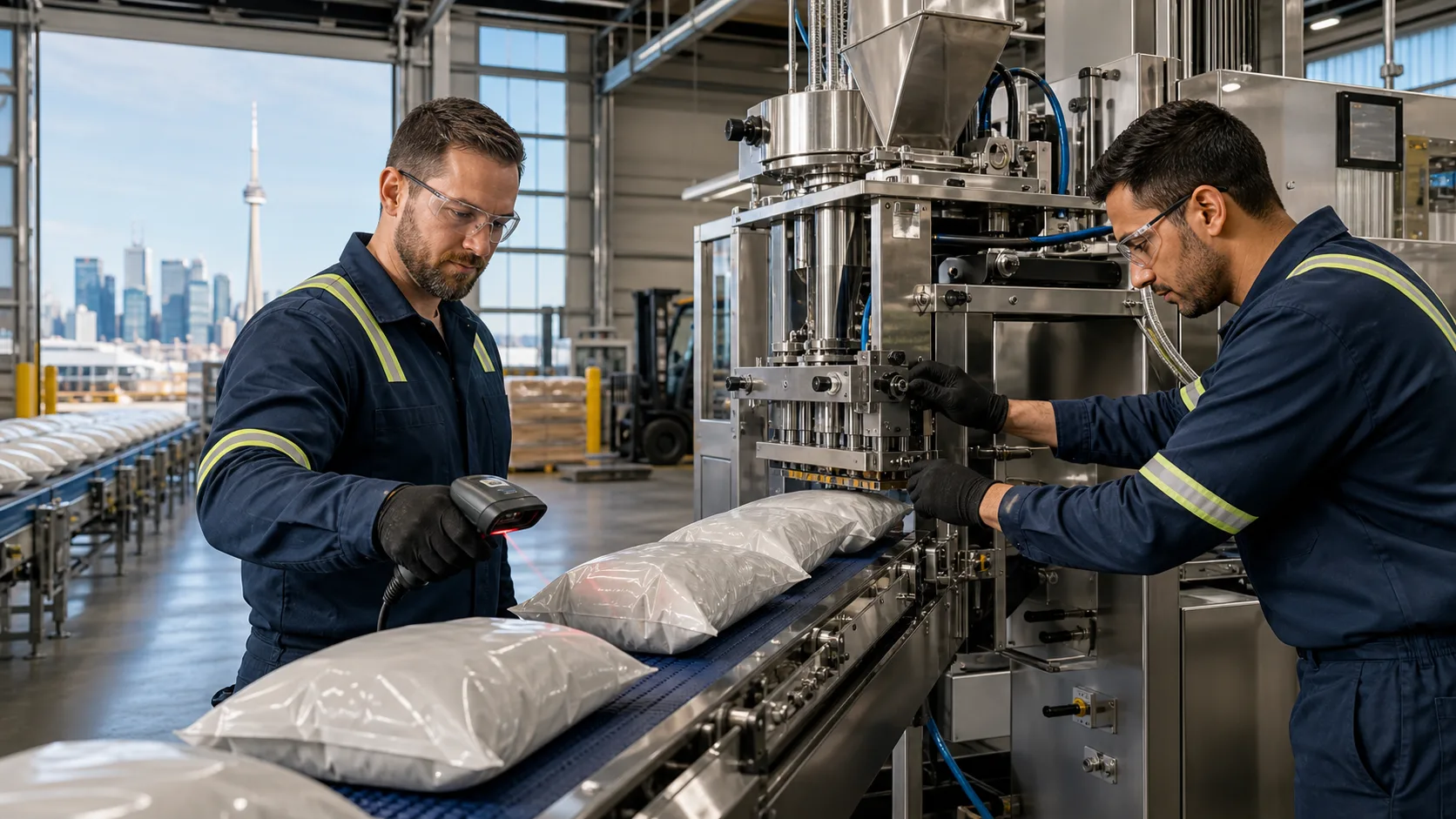
- Misaligned bottles at fillers or cappers due to poor infeed control
- Deformed trays at transfers with sharp edges or big gaps
- Label damage where guides pinch or drag printed surfaces
A structured product handling audit can reveal these weak points. Key checks include:
- Line speeds versus what the packaging and cases can actually handle
- Accumulation pressure and how product stacks when the line stops
- Guide rail height, width, and alignment for each SKU size
- Transfer gaps and transitions between conveyors and case equipment
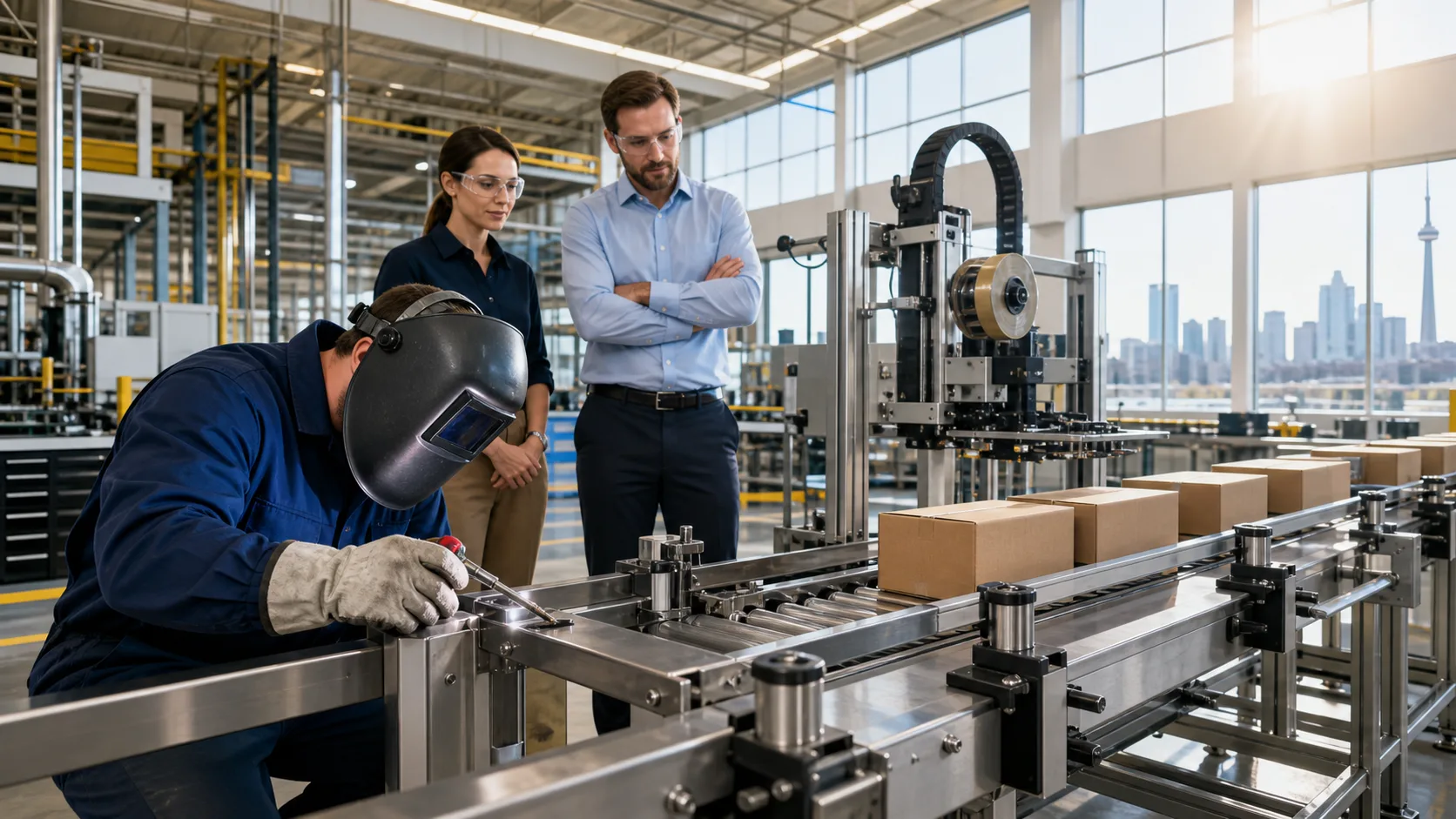
- How custom metal fabrication pieces interact with belts, rollers, and side guides
You know it is time to plan a retrofit when:
- The same SKU or package style keeps triggering quality holds
- Customers report damaged cases or unreadable labels from certain runs
- Operators expect a certain section of the line to “beat up” product
In those cases, engineered changes such as low-pressure accumulation, different belt types, gentler curves, or application-specific custom conveyor systems in Toronto can protect product while keeping throughput up.
Sanitation and Compliance Failures Under CFIA Scrutiny
For food and beverage manufacturers in the Toronto region, conveyors do not just move product; they also affect food safety. Older designs, quick repairs, and add-on components can create areas that are hard to clean or easy to miss. Over time, that can lead to foreign material risks, build-up, and audit findings.
Typical red flags include:
- Bolts, brackets, and guards that trap debris or water
- Belts and components that are not suited to washdown routines
- Tight spaces where cleaning crews cannot reach without disassembly
- Traffic patterns that send dirty tools or bins across clean zones
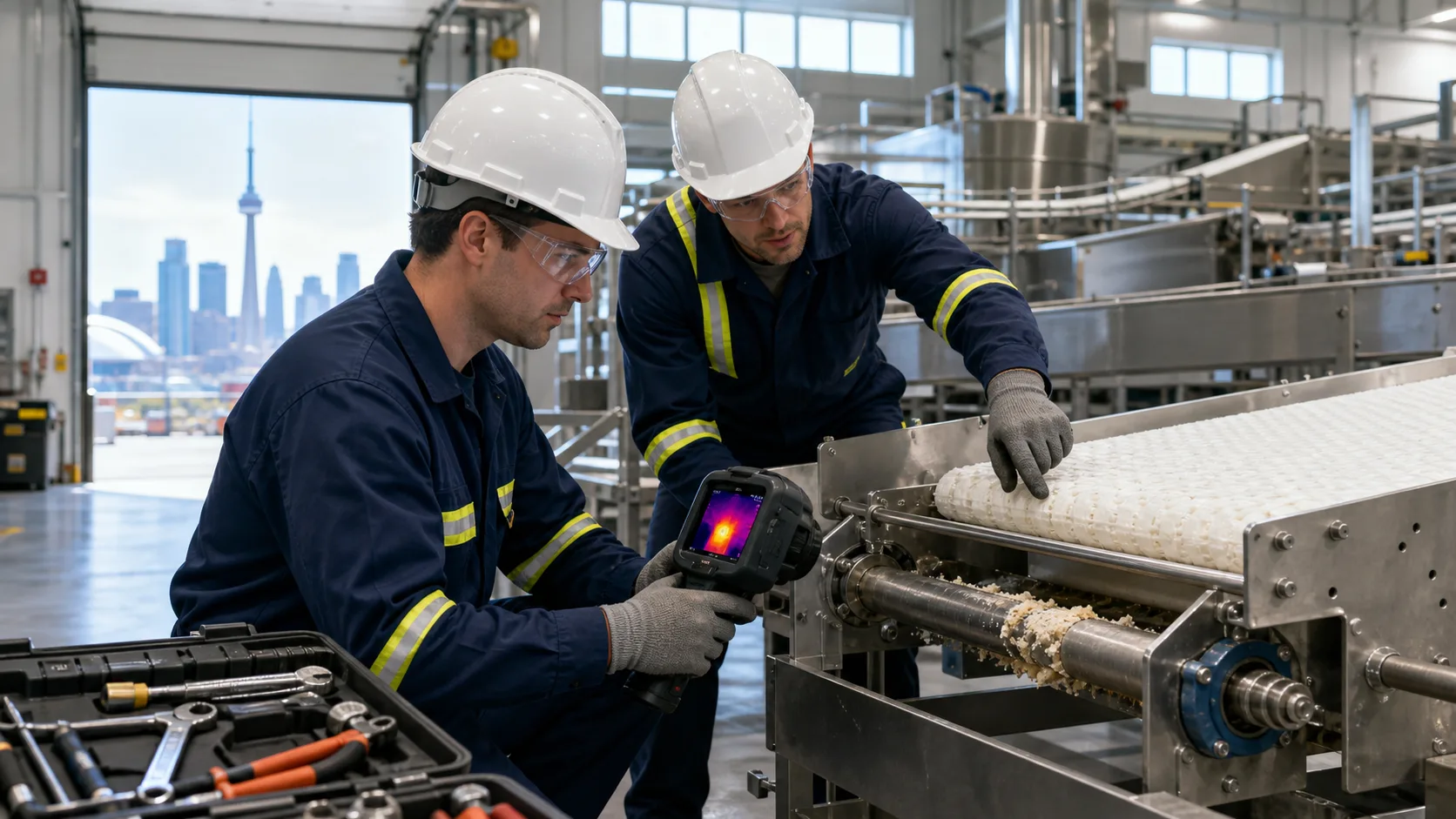
A sanitation-focused review should look at:
- Accessibility for cleaning across the full conveyor length
- Any harbourage points under frames, inside guards, and around supports
- Belt and material choices in relation to your cleaning chemicals and methods
- How the layout interacts with washdown, waste flow, and people movement
Retrofit triggers often show up as:
- Repeated corrective actions after CFIA, GFSI, or customer audits
- Cleaning windows that keep getting longer and squeezing production
- The same sections showing build-up or hygiene hot spots again and again
When that happens, upgrading to hygienic, washdown-ready conveyors or re-engineering sections of your material handling equipment can reduce risk and free up production time.
Changeover Delays That Kill Flexibility
As SKU counts grow and packaging changes with seasons, changeover speed becomes just as important as line speed. In many Greater Toronto plants, rigid conveyors turn every product or format change into extended downtime.
Typical changeover challenges include:
- Manual adjustment of guides at multiple points along the line
- Sensor moves and re-aiming whenever package heights change
- Fillers and case equipment that depend on one or two expert operators to set up
- Tools required for simple adjustments, adding time and safety concerns
To understand the real impact, it helps to:
- Time every step of a changeover from last good piece to first good piece
- List each manual adjustment, including conveyors, rails, photo eyes, and fillers
- Note steps that require special skills or trial-and-error tweaks
- Track how often changeovers lead directly to jams, misfills, or mispacks
Clear retrofit triggers include:
- Missed production targets because changeovers eat too much shift time
- Persistent setup errors that always seem to follow certain format changes
- Operator strain or fatigue from repeated bending, lifting, and fine adjustments
At that point, quick-adjust guides, recipe-based controls, or modular conveyor sections can make changes faster and more repeatable so the line can handle more SKUs without losing hours.
Turning Failure Data Into a Retrofit Roadmap
When you step back and log jams, damage, sanitation issues, and changeover delays in one place, patterns start to stand out. You can see which problems share common roots, which areas of the line create the most risk, and which upgrades will give the biggest impact on uptime and quality.
A practical retrofit roadmap often includes:
- A ranked list of trouble spots based on frequency and impact on output
- Short-term fixes that can be handled with controls tweaks or minor hardware changes
- Medium-term projects such as new accumulation, transfers, or guide systems
- Longer-term plans for custom conveyor systems in Toronto that match your growth plans
For many plants, the quieter winter months after year-end are the best time to dig into diagnostics, trial improvements, and slot in physical upgrades. That way, when the next peak season comes around, your conveyors, case equipment, and custom material handling solutions are ready to handle the load.
At PMC Ltd., we design, supply, install, and service end-of-line packaging automation and custom material handling equipment across the Greater Toronto Area. By taking a structured, data-based look at how your conveyors really perform day to day, we help turn recurring failures into a clear plan for a more stable, flexible line.
Get Started With Your Project Today
If you are ready to improve safety, reliability, and throughput on your line, our team can design and build custom conveyor systems in Toronto that match your exact requirements. At PMC LTD., we work closely with your in-house team to understand your process, footprint, and long-term production goals before we engineer a solution. Tell us about your project and we will provide practical options, clear timelines, and realistic budgets so you can plan with confidence. To start the conversation, simply contact us and a specialist will follow up with next steps.