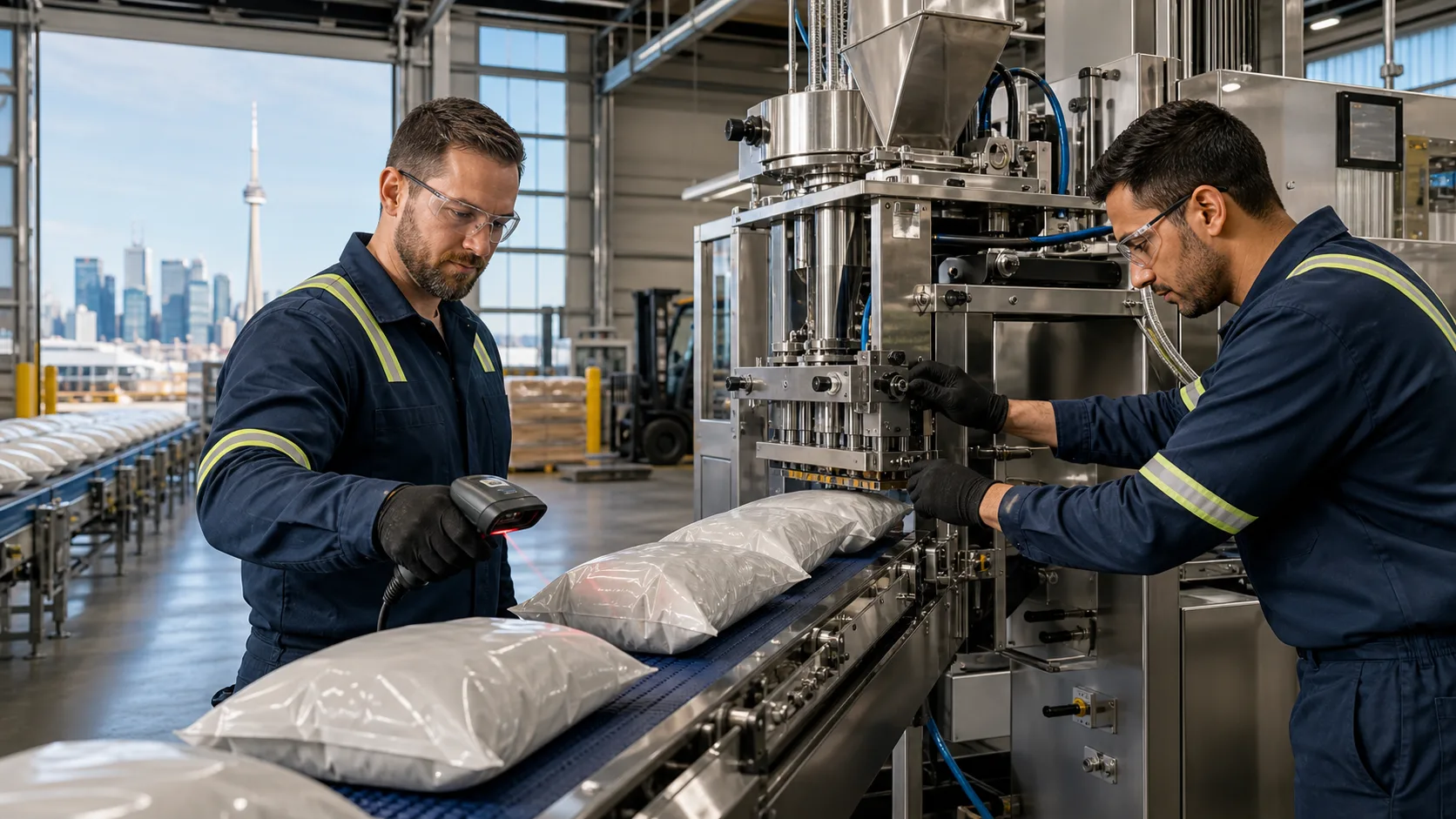
Troubleshooting Automated Bagging Systems in Toronto: Tracking, Seals, Downtime
Keep Your Automated Bagging Line Running in Any Toronto Season
Automated bagging systems in Toronto plants work hard. When they stop, even for a few minutes, quotas slip, labour scrambles, and overtime starts to creep in. Many lines do not fail in one big event. They lose small chunks of time all day because of film issues, bad seals, or little mechanical problems that keep coming back.
In the Greater Toronto Area, the mix of hot, humid summers and cold, dry winters makes this even tougher. Film behaves differently, air lines sweat or dry out, and doors opening to the dock can swing temperatures on the floor. A small tracking issue that is easy to ignore in August can turn into a full stop in February.
In this article, we walk through clear, practical checks your team can use on the floor. We focus on three of the biggest headaches: film tracking, seal integrity, and common downtime causes on baggers. As an end-of-line automation partner based here in the GTA, we at PMC Ltd. see these issues every week, and we know they can be managed with the right habits and set-ups.
Why Film Tracking Fails on Toronto Bagging Lines
When film will not track, everyone feels it. You see:
- Film wandering off the centre line
- Wrinkles or diagonal creases near the former
- Registration marks drifting, so print does not line up with the seal
- Jams at the forming tube or in the sealing jaws
Often the root cause is simple. Incorrect threading around rollers, a forming tube that is a bit skewed, or a worn idler can pull the film to one side. If the film roll is not square to the machine, it will slowly walk until you are fighting constant adjustments.
Toronto’s seasons also play a role. In cold, dry winter air, film can build static. It clings to rollers and forming sets, then suddenly snaps free and jumps sideways. In warm, humid months, friction changes again. The same brake setting that ran fine in summer may be too tight in late fall, which leads to tension spikes, stretched film, and poor tracking.
A simple, repeatable sequence helps keep tracking stable:
- Confirm film threading against the machine diagram, including wrap angles on key rollers
- Check film brakes or tension controls, and return them to a known baseline setting
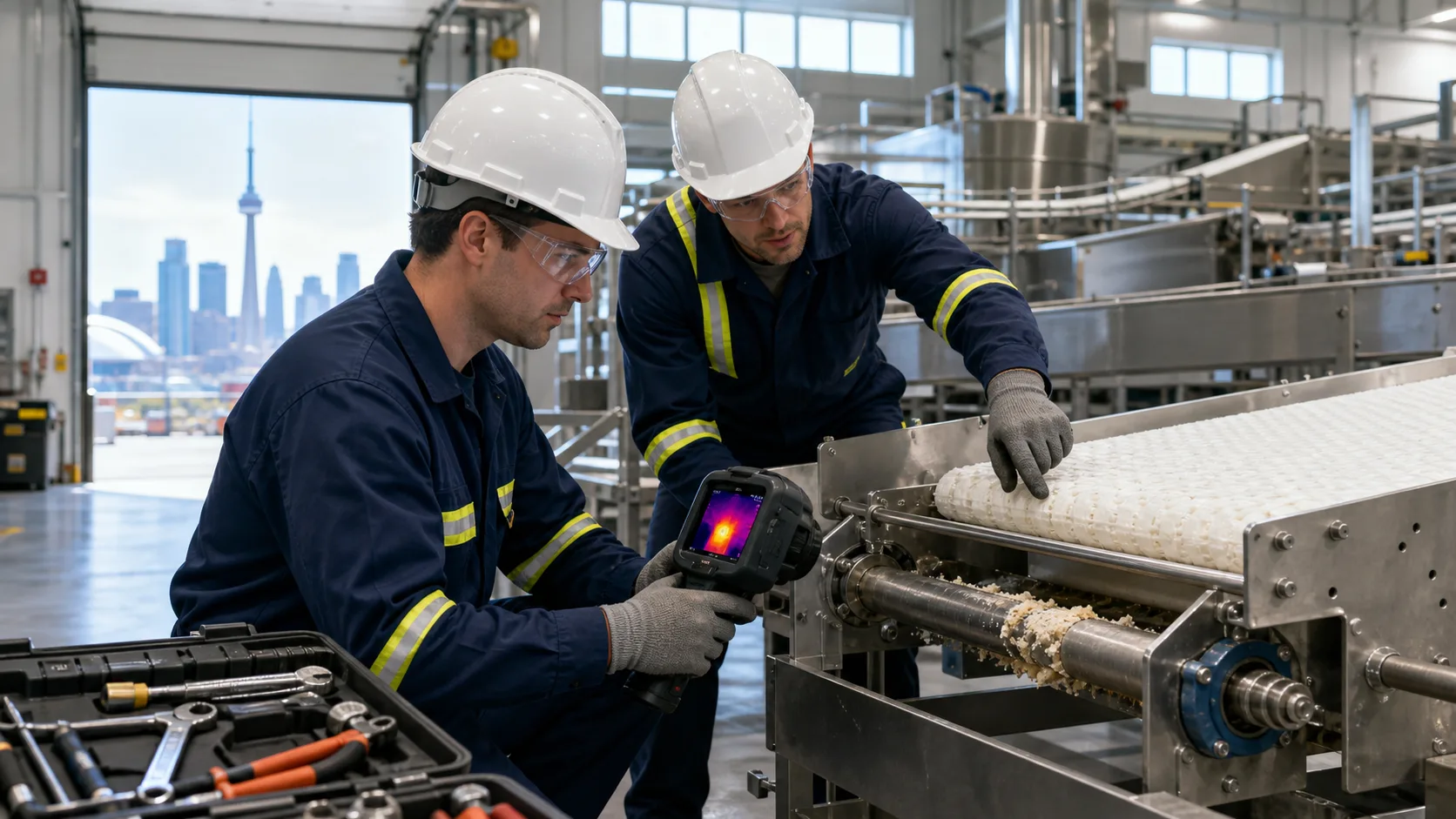
- Inspect rollers, edge guides, and idlers for wear, flat spots, or product build-up
- Verify the film roll is square and centred to the web path
- Record “best run” settings by film SKU so operators know where to start
Operator training makes a big difference. When operators know that a small wrinkle, a faint ticking sound, or a slight skew on the back seal means trouble is coming, they can pause and correct before the film folds into a full jam.
Protecting Seal Integrity When Temperatures Swing
Weak or bad seals cost you twice. You lose line time reworking, and you risk product damage later in transit. On the floor, poor seal integrity shows up as:
- Open seams or pinholes at the side or end seals
- Seals that peel apart with light finger pressure
- Bags that burst at the seal when dropped or stacked
- Scorched, brittle film where sealing jaws ran too hot
Seasonal temperature and humidity swings across the GTA can shift seal behaviour. When dock doors open often, cold air can move across the machine. Seal bars that were tuned early in the shift may cool down on one side, changing how the seal forms. In humid weather, some films need slightly different heat or dwell to flow and bond properly.
Key checkpoints for seal quality include:
- Verify jaw temperature with a calibrated device, not just the HMI reading
- Check pressure balance side to side so the seal looks even across the width
- Confirm dwell time is correct for the film and thickness you are running
- Clean sealing faces so there is no film build-up, product smear, or tape residue
- Confirm the film spec and seal layer are right for the product and sealing style
Before busy periods, it helps to run a short preventive routine. Many plants:
- Log “golden settings” for each bag or film type, including temperature, pressure, and dwell
- Run random drop or burst tests on finished bags to check real-world seal strength
- Inspect jaw faces, TEFLON covers, and heaters, and replace worn parts before they fail
These habits reduce the mystery. When a seal fails, you can compare current settings to your known good baseline instead of guessing.
Diagnosing the Most Common Downtime Causes
When the bagger stops, it is tempting to jump straight to deep mechanical work. Often, the problem is smaller and faster to clear. Across many GTA plants, the same causes come up again and again:
- Sensors or photoeyes knocked out of line or covered by dust
- Product bridging or hanging up in the infeed, so bags do not fill evenly
- Bags catching at the forming shoulder or tube, often from poor threading or worn parts
- Backups downstream at case packers, conveyors, or stretch wrappers that starve or block the bagger
A simple “first 5 minutes” checklist can save a lot of time:
- Confirm power and air supply are stable and valves are open
- Review HMI alarms and any settings changed in the last shift
- Inspect all critical photoeyes and sensors for dirt, film dust, or misalignment
- Check for consistent product flow into the scale, weigher, or infeed conveyor
- Walk the line downstream and confirm cases, conveyors, and wrappers are clear
Basic housekeeping goes a long way. Film dust, product fines, and corrugated scraps tend to collect around guides and moving parts. When these work into sensor fields or bearing surfaces, you get intermittent, hard-to-find faults.
A simple downtime log, even in a basic spreadsheet, helps Toronto maintenance teams see patterns over time. You can track:
- Which SKUs have the most stops
- Which shifts see more issues
- Whether certain humidity or temperature conditions line up with faults
Once you see patterns, you know where to focus training, spare parts, or upgrades.
Matching Your Bagging Setup to Toronto Production Demands
As production ramps up with promotional SKUs, short runs, or rush orders, baggers get pushed hard. Frequent changeovers, new film types, and different bag sizes all stress equipment if the set-up is not dialed in.
Several configuration points are easy to miss:
- Forming set size must match bag width and film specs, or you will fight tracking and seals
- Product settling or vibration may be needed to keep fills consistent and avoid overstuffed bags
- Conveyors, case packers, and case sealers downstream must be sized and timed to the bagger speed
If older equipment has been added piece by piece, repeat faults may be a symptom of poor fit between machines rather than one bad unit. In those cases, it can make sense to look at newer automated bagging systems in Toronto that offer better film tracking, recipe storage, and on-screen diagnostics.
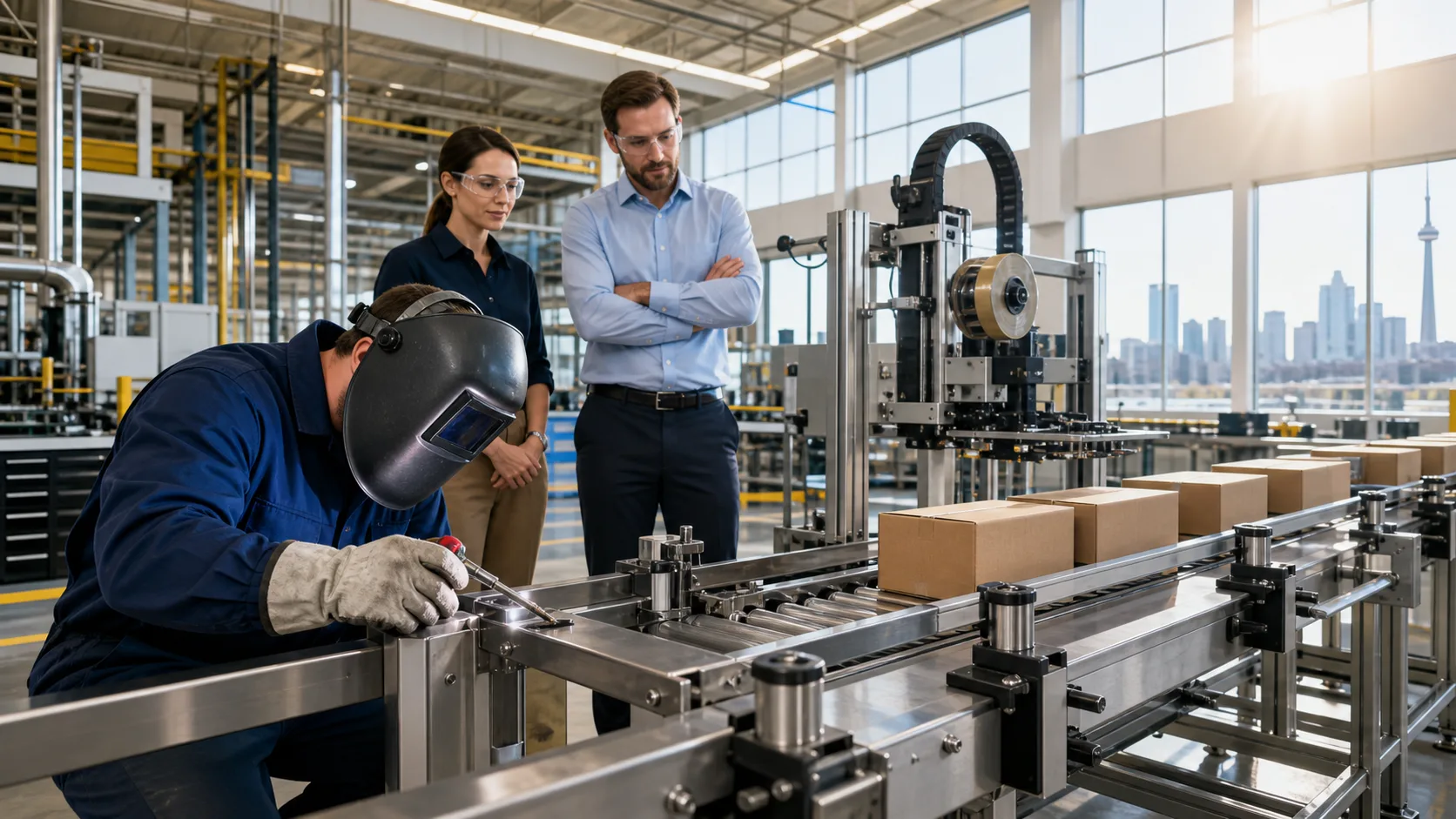
Sometimes a full machine change is not required. Custom metal fabrication can solve chronic issues, such as:
- Brackets to hold sensors firm and repeatable
- Guarding that keeps operators safe while still allowing easy cleaning
- Adjustment points that make alignment fast and repeatable after cleaning or maintenance
With the right brackets, supports, and guarding, your current bagger can often run more steadily and be easier to troubleshoot.
Build a Proactive Bagging Reliability Plan Before Peak Season
Treat the lead-up to peak season as a tune-up window, not just another month of production. When October rolls around in Toronto, many lines are about to get busier, while temperatures on the floor start to shift.
A simple reliability plan can include:
- A focused inspection of baggers, infeed systems, and downstream equipment
- Refresher training for operators on threading, basic checks, and early-warning signs
- Standard troubleshooting guides posted at the machine for the first 5 minutes of checks
- Updated downtime logging so you can track where time is really being lost
It also helps to clarify a layered support model. Operators can handle visual checks, simple resets, and basic cleaning. Maintenance can take on mechanical alignment, sensor replacement, and seal calibration. When issues are repeat, complex, or tied to new products, local automation specialists can step in to review bagging design, changeover methods, and any custom fabrication that might help.
At PMC Ltd., we design, supply, install, and support end-of-line packaging automation, including automated bagging systems in Toronto and nearby manufacturing hubs. By pairing smart troubleshooting habits with the right equipment set-up, your team can keep the line running smoothly through every season.
Get Started With Your Project Today
If you are ready to improve accuracy and throughput in your packaging line, our team at PMC LTD. can help you plan and implement automated bagging systems in Toronto tailored to your operation. We will work with you to understand your products, space constraints, and growth targets before recommending the right solution. To discuss timelines, budgets, or technical details, simply contact us and we will follow up promptly with practical next steps for your project.