Leveraging Product Handling Systems in Toronto for Faster, Safer Changeovers
Leveraging Product Handling Systems in Toronto for Safer Changeovers
Changeovers can make or break a packaging line. When you are switching between products, sizes, cases, or labels, every minute the line is not running means lost output and more stress on your team. For manufacturers around Toronto that run short batches and many SKUs, slow changeovers can quietly eat up a big part of the shift.
In this article, we share how better product handling systems in Toronto plants can speed up changeovers while making them safer and more consistent. We will walk through why changeovers slow things down, what good handling design looks like, and how thoughtful upgrades can prepare your lines for peak demand without adding extra risk.
Why Changeovers Slow Down Toronto Manufacturers
On many end-of-line packaging lines, changeovers are still a very manual process. Operators walk the line, loosen knobs, slide guides, swap parts and hope they remember every step. This leaves a lot of room for delay and error.
Common bottlenecks we see include:
- Manual adjustments that depend on operator feel instead of clear settings
- Different approaches on each shift, so no two changeovers look the same
- Older equipment that was built for long runs, not constant SKU changes
- Components that are hard to reach, heavy or awkward to move
When lines are changing over several times a day, all these delays add up. The impact shows up in:
- Higher cost per case, since more labour time is spent with the line stopped
- Pressure on on-time delivery when orders spike, such as before major retail pushes
- Extra overtime and weekend work to catch up when production slips
There is also a safety side. Rushed changeovers can lead to:
- Unsafe reach-ins around moving parts
- Exposure to pinch points while people adjust guides or belts
- Shortcuts on lockout and tagout when teams feel they have to hurry
So the real goal is not only quicker changeovers, but safer and more repeatable ones that work across all shifts.
How Product Handling Systems Enable Safer Setups
Engineered product handling systems bring structure to what is often a loose, memory-based process. When we design handling for a line, we look for ways to make the changeover steps obvious, repeatable and safe.
Good handling systems usually include:
- Guides, rails and conveyors with fixed or clearly marked home positions
- Mechanical stops or scales so each format has a known setting
- Simple clamps or locks that show when something is properly secured
Safety is built in through:
- Fixed guarding around moving parts that do not need regular access
- Interlocks that prevent the machine from running with gates open
- Ergonomic access doors and platforms so staff are not climbing or reaching dangerously
- Clear labels on change points so people know where to stand and what to touch
When catalogue equipment is combined with custom handling, the result can fit both the product and the plant. Off-the-shelf modules bring proven designs, while custom pieces handle tricky transfers or tight spaces. The goal is to meet safety expectations, fit company EHS rules and still keep lines easy to run.
Designing for Faster, Repeatable Changeovers
Speed and consistency come from design choices made long before the first changeover. When we plan new product handling systems in Toronto facilities, we focus on features that help operators make the right move the first time.
On the mechanical side, helpful strategies include:
- Quick-release tooling for product-specific parts like lanes or guides
- Toolless adjustments using hand knobs or levers instead of wrenches
- Colour-coded handles and scales that match each SKU or format
- Digital or printed setpoint references so staff do not guess positions
Controls also make a big difference. A well-set-up PLC and HMI can:
- Store recipes for each product, with target speeds, positions and timing
- Guide operators step by step through the changeover with on-screen prompts
- Use sensors to confirm guards, gates and key parts are in the correct position before restart
At PMC Ltd., we design these features around the lines that are already in place. Many Toronto plants have limited floor space, tight aisles or columns in awkward spots. We match new handling to existing machines and layouts, so improvements fit into the current footprint while still leaving room for future SKUs and formats.
Integrating Product Handling Systems in Toronto Facilities
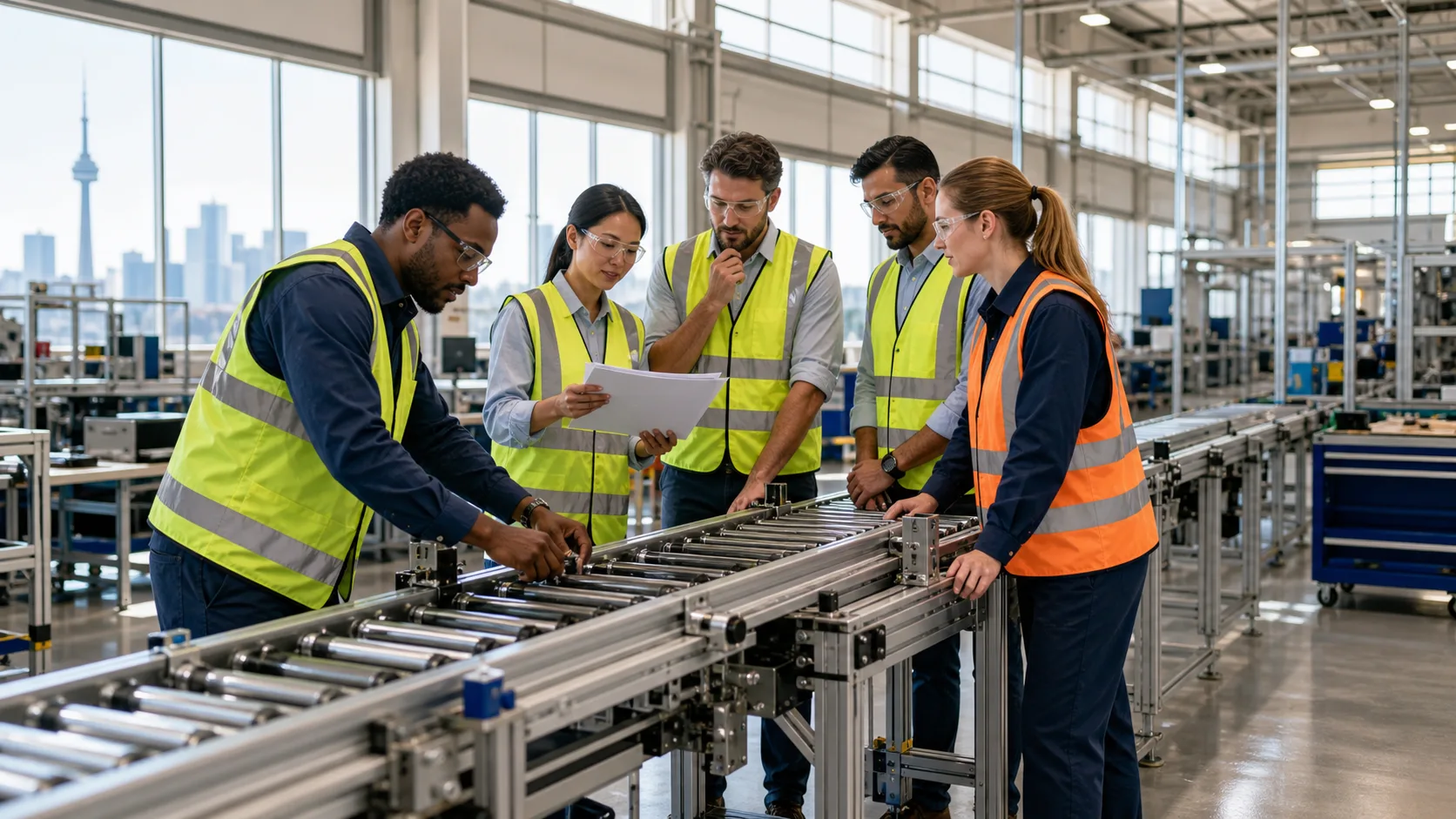
A good project starts with a clear look at what is really happening on the floor. When we work with local manufacturers, we typically begin with a line walk focused on changeovers rather than just output.
A typical process might include:
- Watching full changeovers on key SKUs and noting every step
- Mapping where people walk, what tools they use and where they wait
- Flagging points where operators have to reach, lift or twist in awkward ways
- Identifying spots where conveyors, accumulation or simple diverters could smooth flow
From there, we look at which upgrades give the biggest impact for the least disruption. Often this means a smart mix of:
- Off-the-shelf conveyors or accumulators for straightforward sections
- Standard diverters or merges to control product flow
- Custom-fabricated brackets, frames or change parts to suit building constraints
Installation planning is just as important as design. Many Toronto plants run tight schedules, so upgrades need to fit around production. We often plan:
- Phased work that improves one section at a time
- Weekend or off-shift installs to protect weekday output
- Use of planned maintenance shutdowns for larger tie-ins
Thoughtful staging keeps lines earning while they are being improved.
Measuring ROI on Safer, Faster Changeovers
To show whether an upgrade is working, you need simple, clear numbers. You do not need complex systems to start, just consistent tracking before and after changes.
Useful metrics often include:
- Average changeover time for each line and format
- Overall uptime percentage on the line during a shift
- Cases per hour during steady running
- Number of incidents, near misses or unsafe conditions linked to setups
Basic data logging in the controls, combined with manual records, can reveal where gains are coming from. As improvements prove themselves, it becomes easier to build the case for further automation or more advanced handling.
For manufacturers across the Greater Toronto Area, the payoffs go beyond time savings. Better changeovers can:
- Make it easier to respond when retailers ask for new formats or quick switches
- Reduce reliance on a few experienced operators, since the process is built into the equipment
- Support safety and quality audits by showing clear procedures and upgraded guarding
When product handling systems are designed with both people and performance in mind, changeovers turn from a headache into a controlled, predictable part of the day.
Get Started With Your Project Today
If you are ready to improve your material flow and reduce downtime, our team at PMC LTD. is here to help design and integrate tailored product handling systems in Toronto. We work closely with you to understand your process, space, and production goals so your solution fits from day one. To discuss your requirements or request a quote, simply contact us and we will follow up with practical next steps.