Custom Conveyor Systems for Toronto Manufacturers: Requirements Checklist
Plan Your Next Conveyor Project with Confidence
Planning a new conveyor is not just about picking a belt and a motor. For Toronto manufacturers, it often ties into big goals like keeping up with demand, easing labour pressure, and lining up capital projects before year-end. A clear plan means fewer surprises on the plant floor and smoother approvals in the office.
Many plants revisit conveyor and material handling projects as they prepare for busy seasons, use remaining capital budgets, or set the stage for longer-term automation goals. Custom conveyor systems in Toronto can help reduce manual handling, close staffing gaps, and increase throughput without needing more floor space. This checklist is meant to help plant managers, engineers, and operations leaders collect the right details before requesting quotes so vendors can respond faster with proposals that actually fit your operation.
Clarify Products, Packaging Formats, and Flow
The first step is always the product. If the product details are fuzzy, the conveyor quote will be too. Spend time up front getting clear on what the line needs to move, today and in the future.
Make a simple list that includes:
- Product name or family
- Packaging type, like bags, cases, trays, bottles, pails, totes, or loose product in bins
- Length, width, height, and weight range for each format
- Any fragile, sticky, sharp, or unstable products
Note any special concerns. Do cases crush if stacked? Do bags sag between rollers? Do pails tip easily? These small details drive choices like belt type, roller spacing, and side guides.
Next, sketch how product should travel through your line:
- Where does product enter and exit the conveyor?
- Are there elevation changes, like floor to mezzanine or up to a case packer?
- Where do you want accumulation zones and inspection or reject points?
- Which manual touchpoints do you hope to remove or shorten?
Changeover needs are just as important as the physical path. List:
- How many SKUs run on the line
- How often changeovers happen in a shift or week
- Whether guides or tooling need to move for each changeover
- If you expect quick, tool-free adjustments to keep uptime high
Clear information here helps designers choose the right style of conveyor, supports, and line accessories so your system does not become a headache at changeover time.
Define Speeds, Volumes, and System Performance
Conveyors should be sized for how your plant actually runs, not just how it runs on paper. Start with present speeds, then add where you want to be.
For each product family, capture:
- Current and target units per minute or cases per hour
- Any slow, normal, and high-speed modes
- Differences by shift, like day shift vs night shift speeds
Do not forget about seasonal spikes. Many Toronto plants see changes during promotions or busy shipping months. Note your typical and peak loads so the system is not undersized when it matters most.
Be clear about what “good performance” means for your line:
- How much accumulation do you want ahead of key machines?
- Do you need controlled merges and diverts, or is simple flow enough?
- How long can queues be before they cause upstream starvation or downstream backup?
- What should happen during short stops, like printer faults or manual inspections?
When performance rules are written down, controls and conveyor choices can be matched to your real production style instead of guesswork.
Plan for Sanitation, Safety, and Local Compliance
Every plant has its own bar for cleanliness and safety. A conveyor that is hard to clean or awkward to guard can cost far more in uptime and risk than it saves on day one.
Start with sanitation needs by thinking about your products and cleaning routine:
- Do you need food-grade belts and stainless steel frames?
- What level of washdown is expected, light wipe-down or regular high-pressure cleaning?
- Which chemicals are used for cleaning and sanitation?
- How often are deep cleans done, daily, weekly, or less often?
This helps decide on materials, belt styles, and access for cleaning. Easy belt removal, drip trays, and open-frame designs may all be worth discussing.
Safety should be built in from the start. Consider:
- Guarding around pinch points and transfers
- Safe access for operators, with walkways or platforms where needed
- Locations for emergency stops and lockout/tagout points
- Use of photo-eyes and light curtains around high-risk zones
Also note any standards or guidelines that apply in your plant. Food, pharma, and cannabis operations may follow specific codes. You may also have internal corporate rules, plus Ontario safety expectations and WSIB guidance that need to be met or exceeded. Sharing these upfront keeps design and approval aligned.
Measure Space, Layout Constraints, and Integration Needs
Space in a GTA plant is rarely simple. Low ceilings, support columns, busy aisles, and existing equipment all shape what is possible.
Start by documenting your layout:
- Ceiling height and any overhead obstructions
- Column locations and mezzanine edges
- Doorways, dock openings, and clearances
- Available floor space for conveyors, supports, and control panels
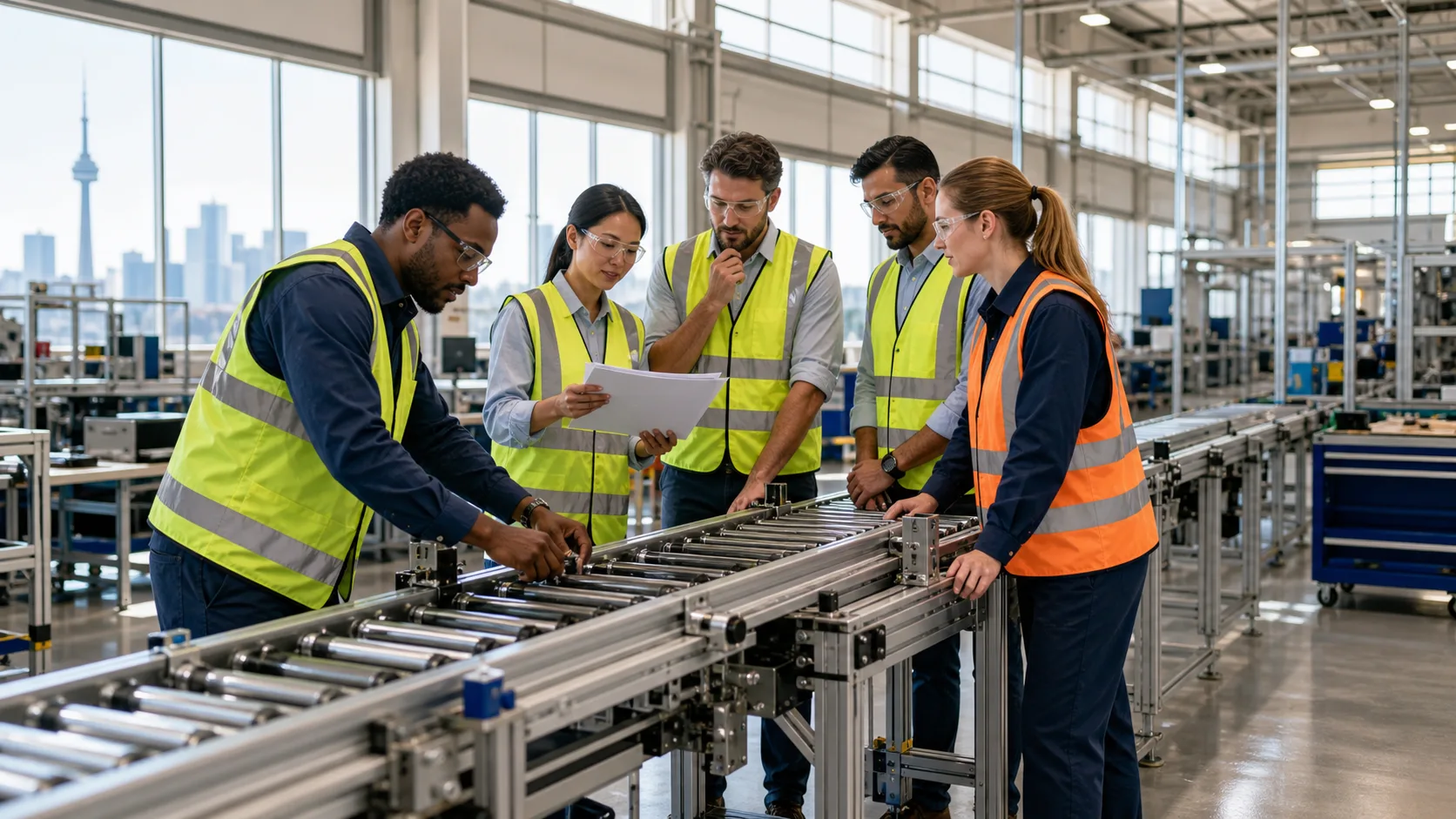
Pay extra attention to tricky zones. Tight corners, overhead runs, or spots where product must pass over aisles often call for custom supports, spirals, or vertical lifts. Also note forklift routes, pedestrian walkways, and cross-aisle traffic. Keeping these safe and open is just as important as moving product.
Integration is where a conveyor becomes part of a system, not just a moving belt. List all equipment that needs to connect, such as:
- Case packers, palletizers, and stretch wrappers
- Labelers, printers, checkweighers, and metal detectors
- Robots, vision systems, and manual packing stations
- Existing control platforms, WMS, or ERP connections
Include heights, infeed and discharge positions, and any current pain points. For example, poor transfers into a palletizer, short accumulation ahead of a labeler, or awkward manual rework loops.
Align Budget, Timeline, and Vendor Expectations
A clear scope is only part of the story. Budget and timing shape which options make sense for your plant.
It helps to share a budget range and what matters most. Think about trade-offs around:
- Higher speeds vs more flexibility for future formats
- Basic controls vs higher levels of automation and data
- Painted steel vs stainless construction in key areas
- Single-phase projects vs modular systems that can expand later
Next, outline key dates. Include:
- When you expect internal approvals
- Target design review and sign-off
- Preferred installation windows, including how you handle winter deliveries or shutdown periods
- Time needed for commissioning, operator training, and maintenance handover
Finally, be open about what you expect from a local partner. Some plants want full support from concept to production, while others handle more work in-house. Typical services to consider include:
- On-site surveys and field measurements
- 2D or 3D layouts, and if needed, system simulations
- Supply and installation of conveyors, platforms, and guarding
- Controls programming, integration, and on-site commissioning
- After-sales service, with local technicians who can respond quickly in the GTA
Clear expectations help both sides decide if the fit is right before anyone spends serious time on detailed designs.
Turn Your Requirements Into a Ready-to-Quote Package
Once you have walked through these steps, you can pull everything into a simple RFQ package that makes it easy for vendors to respond accurately. At a minimum, include:
- Product and packaging list, with dimensions and weights
- Line layout sketches or floor plans, even if they are rough
- Photos and notes from the existing line, including tight spots
- Utility information for power and air, plus any controls standards
- Performance targets, sanitation rules, and safety expectations
Involve people from production, maintenance, safety, quality, and finance as you review the package. Each group sees different risks and opportunities. When they give input early, you are more likely to land on a conveyor design that works for the whole plant, not just one department.
At PMC Ltd, we design, supply, and install automated end-of-line packaging machinery and custom material handling solutions for manufacturers across the Greater Toronto Area. Careful front-end planning makes custom conveyor systems in Toronto faster to quote, easier to install, and more reliable over the long term, which is better for your operators, your maintenance team, and your production targets.
Get Started With Your Project Today
If you are ready to improve safety, throughput, and reliability on your production floor, our team can design and build custom conveyor systems in Toronto tailored to your operation. At PMC LTD., we collaborate closely with your engineers and operators to ensure every detail supports your workflow and future expansion. Reach out today to discuss your project requirements or request a site assessment through our contact page.