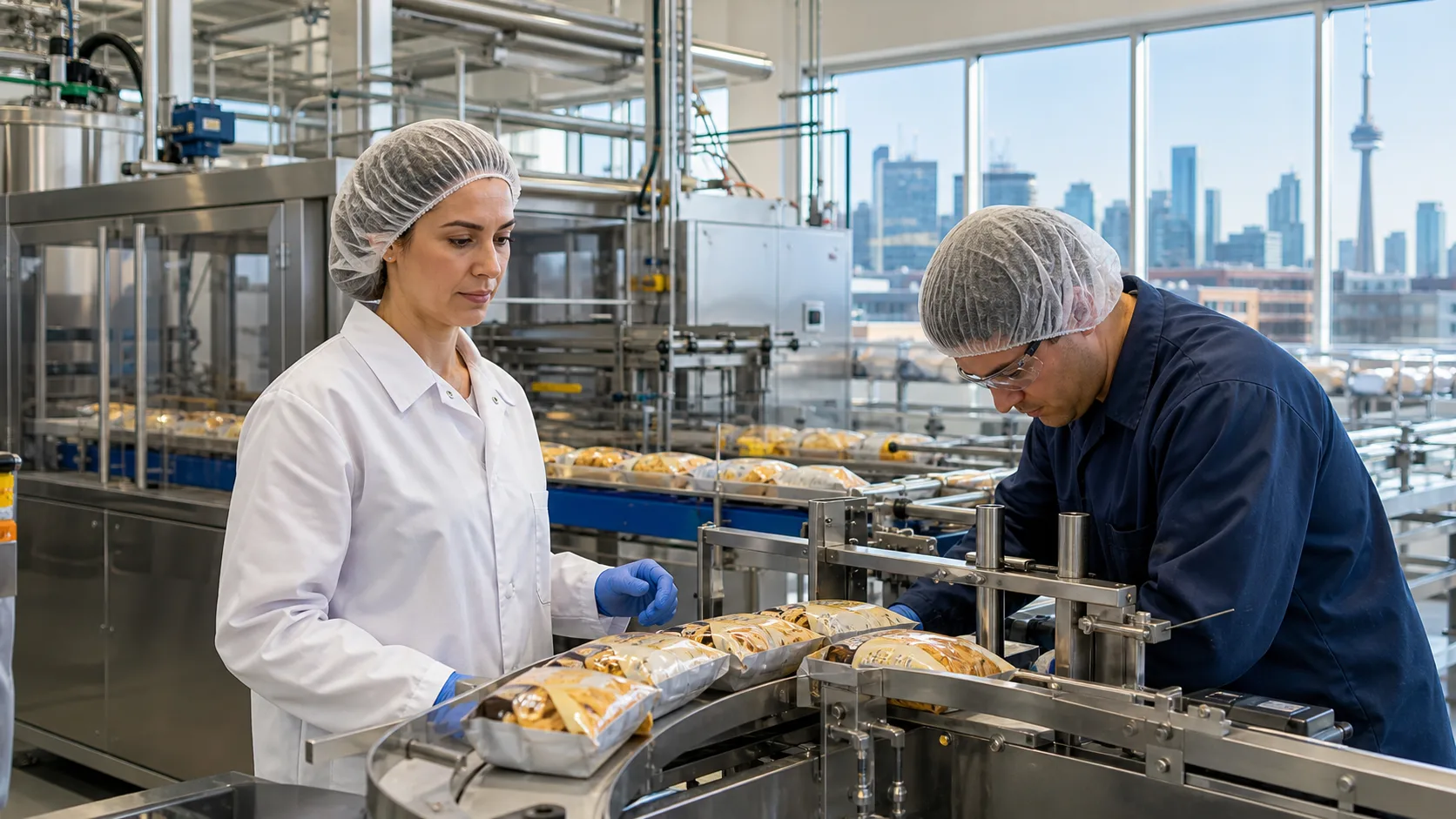
Toronto’s Hidden Bottleneck: When Product Handling Systems Limit Your Line
Toronto’s Hidden Bottleneck: When Handling Systems Limit Output
A product can be filled, packed and sealed at full speed, but if it does not move cleanly through the end of the line, the whole plant feels it. Many Greater Toronto Area manufacturers find that the real limit on their output is not the fancy upstream machines; it is the product handling systems quietly slowing everything down.
In this article, we talk about what those hidden bottlenecks look like on a Toronto floor, what they really cost during busy seasons, and how better product handling systems in Toronto plants can unlock capacity you already paid for. We keep the focus on practical signs you can see and changes that actually fit older buildings, tight footprints and local labour conditions.
Why Toronto Lines Stall Before They Scale
Picture a busy Q4. Orders are up, demand is strong, and on paper your line should keep up. The filler rating looks fine, the case packer is in range, and the palletizer is ready. Yet cases keep jamming at transfers, pallets back up near the dock, and operators are constantly jumping in to clear product.
That is what we mean by a hidden bottleneck. It is not a single big failure point like a broken filler. It is the set of conveyors, transfers and material handling equipment that move, orient, merge and accumulate product and cases. When those systems are not designed as a whole, they quietly cap your true line speed.
Our goal here is simple. We want to help Toronto manufacturers see those constraints earlier, understand what they really cost when demand spikes and show how smarter handling can turn a fragile line into a stable, higher capacity system that fits real GTA plants and labour realities.
Where Product Handling Quietly Kills Throughput
Many lines across the GTA have grown over time. A conveyor added here, a small diverter there, a manual transfer that became permanent. None of these changes are bad on their own, but together they create a maze of micro stoppages.
Common ways this shows up are:
- Legacy conveyors that do not track well, so cases skew and need constant nudging
- Manual push points where operators help product through tight turns or merges
- Add-on machines squeezed into any open gap, without enough accumulation before or after
- Old pallet moves done by hand where lift trucks and people cross paths
Toronto adds its own twist. Many plants sit in older buildings with low ceilings, columns in odd spots and very limited floor space. Lines often need to run mixed SKUs for different regional retailers in the same shift. Staffing is usually shift-based, and covering every trouble spot with a person is harder than it used to be.
Product handling systems in Toronto plants need to be designed as part of the full end-of-line, not just as stand-alone pieces bought at different times. When conveyors, diverts, accumulation and load areas are planned together, the line runs closer to the rated speed of the upstream equipment instead of being pulled down by the weakest links.
The True Cost of Handling Bottlenecks in Peak Season
These quiet issues really hurt when volume jumps, especially in late fall when food, beverage, CPG and contract packaging work ramps up. The filler might be ready to run faster, but the product handling will not let it.
Direct costs often show up as:
- Overtime to catch up after repeated slowdowns
- Extra temporary labour to rework, hand pack or re-pack damaged product
- Rush freight when orders miss planned ship dates
- Premium maintenance call-outs when things finally fail under pressure
There are also softer but very real costs. Long delays can lead to on-time delivery penalties from large retailers. Poor service can put hard-won shelf space at risk. If customers in the GTA see empty shelves, they often move to a different brand and might not come back quickly.
The biggest hit is opportunity cost. You are paying for fillers, cartoners or packers that could run faster, but downstream handling stops them from ever reaching that level. That unused capacity is money left on the floor every single shift.
Signs Your Toronto Plant Has a Hidden Handling Problem
You do not need complex software to spot many handling bottlenecks. A short, honest walk from the packer to the dock during a busy shift can tell a lot.
Watch for simple red flags like:
- Operators regularly hand pushing product on conveyors
- People permanently stationed at known trouble spots just to keep things flowing
- Frequent line speed adjustments, slowing down to avoid jams rather than fixing the cause
- Cases that bunch up at merges or arrive skewed at printers or labelers
Data can support what your eyes see. Many plants log big OEE hits, but the line also loses time to small issues marked as minor stops. If those minor stops often point to the same short conveyor or transfer, you likely have a handling issue. Maintenance tickets that repeat for the same area are another clue.
In Toronto, staffing gaps make these problems harder to hide. If you struggle to keep manual handling jobs filled, or if you see near misses around manual pallet moves or case carry points, the handling system is asking people to cover for design issues. That is a risk to both safety and output.
A simple internal audit can help. Walk the line, and each time product stops, bunches up, or needs a human touch, note the spot and the cause if you know it. That list often becomes the starting point for targeted fixes.
Designing Product Handling Systems That Fit GTA Reality
Good product handling systems in Toronto do not start with a catalogue, they start with the building and the way the plant actually runs. Tight footprints, older layouts, neighbours that care about noise and mixed production schedules are all part of the design.
When we design end-of-line handling, we focus on a few core ideas:
- Right-sized accumulation so upstream machines can keep running through short stops
- Controlled merges and diverts that keep product oriented and stable
- Automation of repetitive, low-value handling tasks that are hard to staff
- Ergonomic load and unload points, so operators work at safe heights and clear zones
Flexibility matters too. Many GTA lines run shorter batches, private label work, or different pack formats for various retailers. Quick changeovers, simple guide adjustments and modular conveyor sections let the line adapt without major rebuilds every time you change formats.
Safety and compliance need to be built in, not added later. That means proper guarding around moving equipment, lockout points that are easy to use and layouts that keep pedestrians and lift trucks separated as much as the space allows.
When to Upgrade Versus Optimise What You Have
Not every handling problem needs a full system replacement. In some plants, reconfiguring conveyors, adding modest accumulation or improving controls logic can clear major bottlenecks.
Smart, lower impact changes might include:
- Adding accumulation before case packing so the filler can keep running during short packer stops
- Redesigning transfers at elevation changes so cases stay stable instead of catching and skewing
- Updating controls so upstream and downstream machines talk to each other and balance speeds
- Cleaning up manual intersections between people, pallets and lift trucks with small layout tweaks
A larger upgrade makes sense when the existing system simply cannot support current or future volumes, or when repeated band-aid fixes still leave operators chasing problems every shift. Planning those projects around natural slow periods, like a winter dip or planned maintenance shutdown, reduces disruption.
For multi-shift Toronto plants, it helps to work with a local team that can stage installations, work off shifts and keep parts of the line running while sections are updated. Thoughtful phasing often means you can gain capacity even before the full project is finished.
How Product Handling Becomes a Competitive Edge in Toronto
When product handling systems in Toronto plants move from afterthought to core part of the line, they stop being a source of stress and start supporting growth. A stable, well-designed end-of-line lets you ship more with the same people, reduce overtime pressure and meet tight delivery windows for local customers with less drama.
The first steps are straightforward. Walk your line, look for hidden stoppages, and be honest about how much capacity is lost downstream of your main machines. Then rank the handling issues that cause the most pain, and build a plan to fix them in a realistic window.
PMC Ltd. focuses on designing, supplying and installing end-of-line packaging automation, including custom machinery, conveyors and material handling systems for manufacturers across the Greater Toronto Area. By looking at the whole line, factoring in your building, your labour situation and your mix of products, we help turn those hidden bottlenecks into steady, reliable capacity that is ready for the next surge in demand.
Get Started With Your Project Today
If you are ready to improve efficiency and reliability in your facility, our team at PMC LTD. can design and implement tailored product handling systems in Toronto that fit your exact operational needs. We work closely with you to understand your processes, constraints, and goals so your new solution delivers measurable results. Reach out to contact us and we will help you move from ideas to a practical, well-engineered system.