Is Custom Metal Fabrication the Missing Link in Toronto Packaging Lines?
Why Toronto Packaging Lines Are Hitting a Ceiling
Production in the Greater Toronto Area keeps climbing, while labour is stretched thin and space is tight. Many plants are asking more from the same square footage and the same people, especially as they get ready for summer and fall demand. At a certain point, the usual tweaks to your packaging line stop working and small issues turn into daily headaches.
Off-the-shelf machines alone often cannot fix nagging problems like:
- Bottlenecks between conveyors
- Product getting hung up during transfers
- Awkward layouts caused by building columns or tight corners
- Slow, hands-on changeovers between SKUs
This is where custom metal fabrication can act like the missing link. Instead of ripping out an entire line, you can adapt what you already own, connect it better, and make it work harder. Late spring is a smart time in Toronto to plan these upgrades so the line is ready before things get busy.
Where Standard Packaging Equipment Falls Short
Catalogue equipment is designed for typical layouts and average products. Toronto plants rarely fit that picture. Many facilities are in older industrial buildings with quirks that do not match the brochure.
Common issues we see with standard equipment include:
- Different machine heights that do not line up
- Tight corners where a straight conveyor will not fit
- Unusual product sizes that do not track well on standard guides
- Legacy machines that refuse to match newer equipment
On top of that, plenty of local sites deal with:
- Low ceilings that limit vertical runs or mezzanines
- Shared units where power and floor space are restricted
- Concrete columns sitting exactly where you want to put a conveyor
When things do not fit quite right, people often think they have only two choices: live with the problems or replace the whole line. Full replacement can mean long downtime, electrical changes, permits, new controls, and shuffling production schedules. For a busy GTA plant, that kind of disruption can be hard to absorb.
Custom metal work gives you a third option. Instead of starting from zero, you fine tune what you already own and fill in the gaps that standard gear cannot cover.
How Custom Metal Fabrication Unlocks Line Efficiency
When we talk about custom metal fabrication in Toronto for packaging, we are not just talking about big frames. It covers all the steel pieces that make a line run smoothly and safely.
This can include:
- Frames and bases for new or existing machines
- Guards and fencing around moving parts
- Platforms and stairs for operator access
- Brackets, supports, and mounting plates
- Transition chutes and guides between conveyors
The right fabricated part can:
- Bridge height and angle gaps between machines
- Smooth product transfers so cases, bottles, or bags do not tip
- Remove the need for operators to manually reposition product
- Support higher line speeds without damaging packaging
For food, beverage, and consumer goods in Ontario, it is also about compliance and durability. Stainless steel components, proper welds, and open designs help with washdown and sanitation. Well-designed guarding and platforms support safety expectations and internal standards. Instead of forcing your process to match a stock machine, the metal work is built to match your process.
Smart Ways Toronto Plants Use Fabrication to Upgrade
Custom fabrication is often most powerful in small, targeted changes, not giant overhauls. Operations teams around the GTA use metal work to tighten up their lines in practical ways.
Common upgrades include:
- Custom accumulation tables sized for your space and run rates
- Diverters and lane guides that keep different SKUs on track
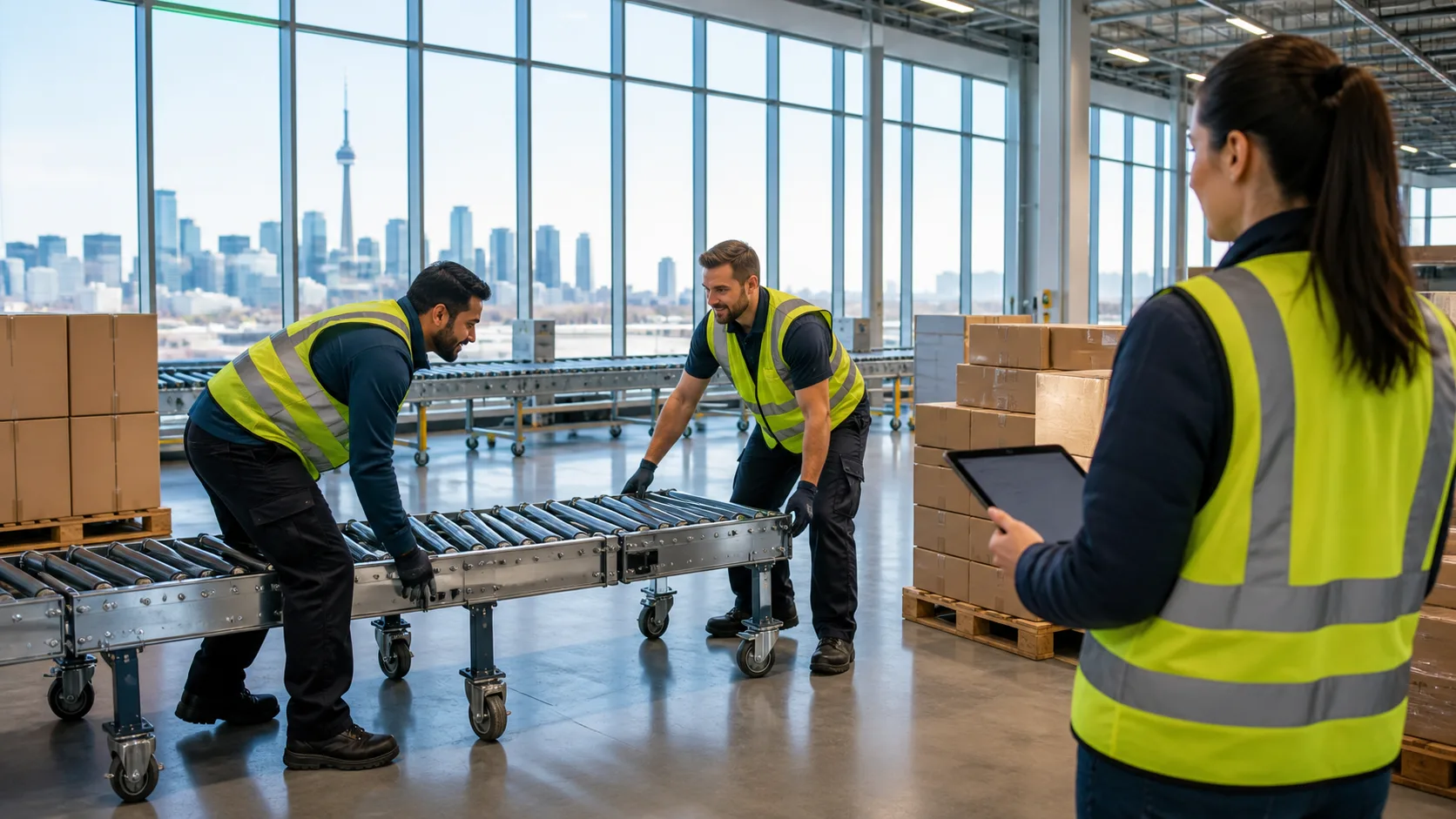
- Short conveyor sections made in mild or stainless steel to slot between existing units
- Transfer plates or chutes that reduce jams between machines
Late spring is a good window for this kind of work. Many plants use this time to:
- Install or update platforms so operators can safely access fillers or case packers
- Add or improve guarding before speeds go up for peak runs
- Create mezzanines where ceiling height allows, opening more floor space for pallets or carts
Working with a local GTA partner keeps things practical. Site measurements can be done quickly, design ideas can be reviewed on location, and changes can be made without long waits. If something is not quite right during installation, a nearby fabricator can adjust or remake parts so the line is ready when production ramps up.
Integrating Fabrication with Automation and Service
Metal fabrication is just one part of a smooth end-of-line system. The real payoff comes when it is planned together with automation, controls, and service.
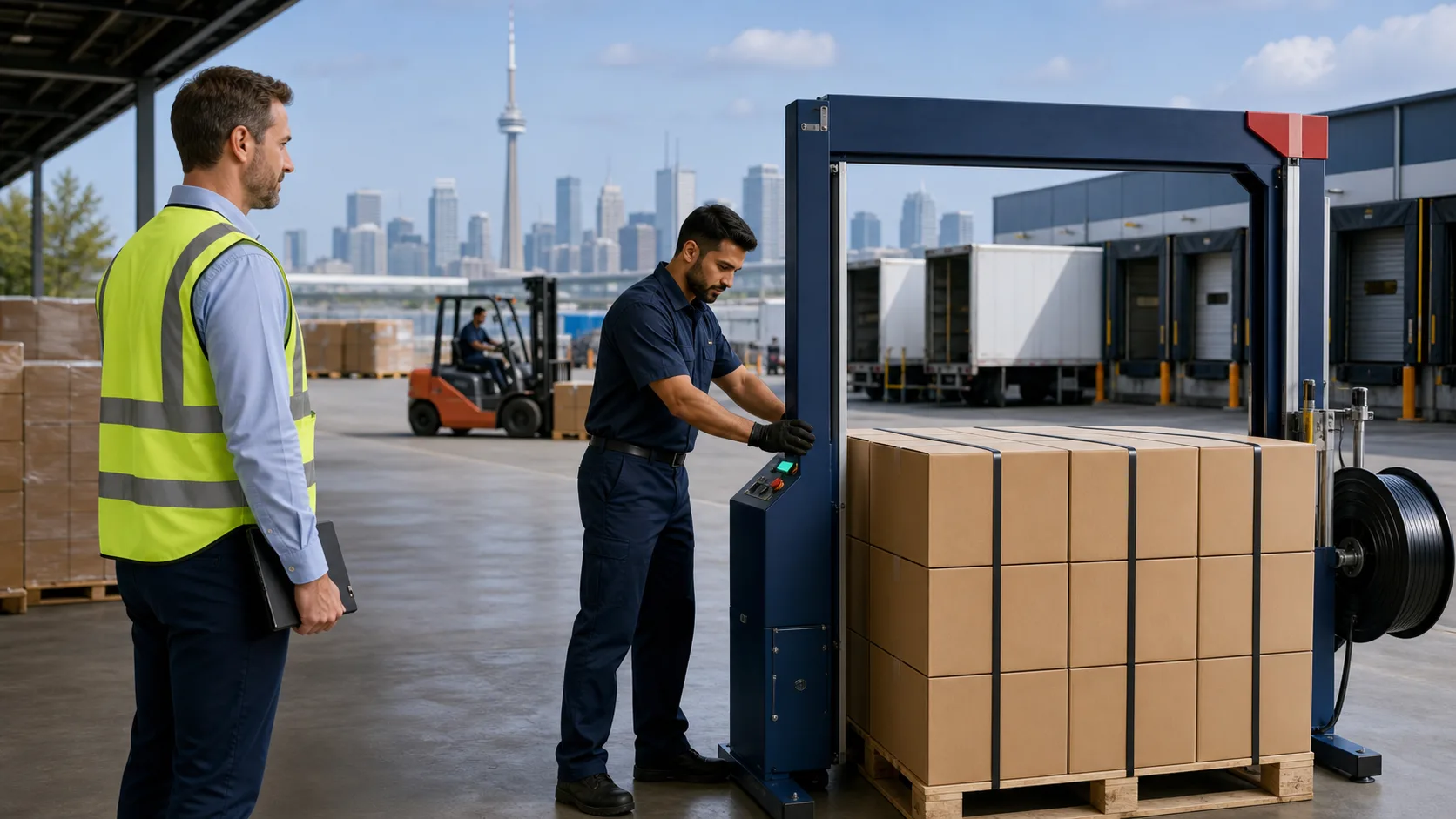
At PMC Ltd, in Toronto, we design, supply, and service complete end-of-line packaging automation. We pull from catalogue equipment for things like case packers, stretch wrappers, palletizers, and conveyors, then fill the gaps with custom metal work. That could mean a stainless frame for a new machine, a special conveyor section to fit a tight corner, or a custom guard that still lets operators see and reach what they need.
Having one partner handle:
- Line design and layout
- Custom metal fabrication
- Installation and commissioning
- Ongoing maintenance and service
can reduce a lot of coordination work for plant teams. When the same service techs know both the machinery and the custom metal pieces, they can spot issues faster, suggest smart adjustments, and plan future upgrades around what is already in place.
Steps to Add Custom Fabrication to Your Toronto Line
If you think your packaging line is close to its limit, custom metal fabrication in Toronto might be the next logical step. A simple, structured approach keeps things clear.
A typical roadmap looks like this:
- On-site assessment of the current line and building constraints
- Mapping product flow from infeed to palletizing
- Pinpointing bottlenecks, unsafe areas, or manual handling points
- Flagging where custom metal pieces could make the biggest impact
To get the most from that process, operations and maintenance teams can prepare:
- Current and target throughput numbers
- A list of SKUs, packaging formats, and changeover needs
- Seasonal volume expectations, especially for summer and holiday peaks
- Sanitation rules and cleaning routines for each area of the line
- Safety concerns or near misses that keep coming up
With that information, it becomes easier to decide which projects should happen first and which can wait for a later shutdown. Custom metal work does not need to be a massive project. It can start with one transfer, one platform, or one short conveyor section that solves a daily pain point and opens the door to bigger improvements down the road.
Get Started With Your Project Today
If you are ready to bring your design to life with precision and durability, our team at PMC LTD. is here to help. Learn more about our capabilities in custom metal fabrication in Toronto and discover how we can support your project from concept to completion. To discuss your specifications, timelines, and budget, simply contact us and we will respond promptly with next steps.